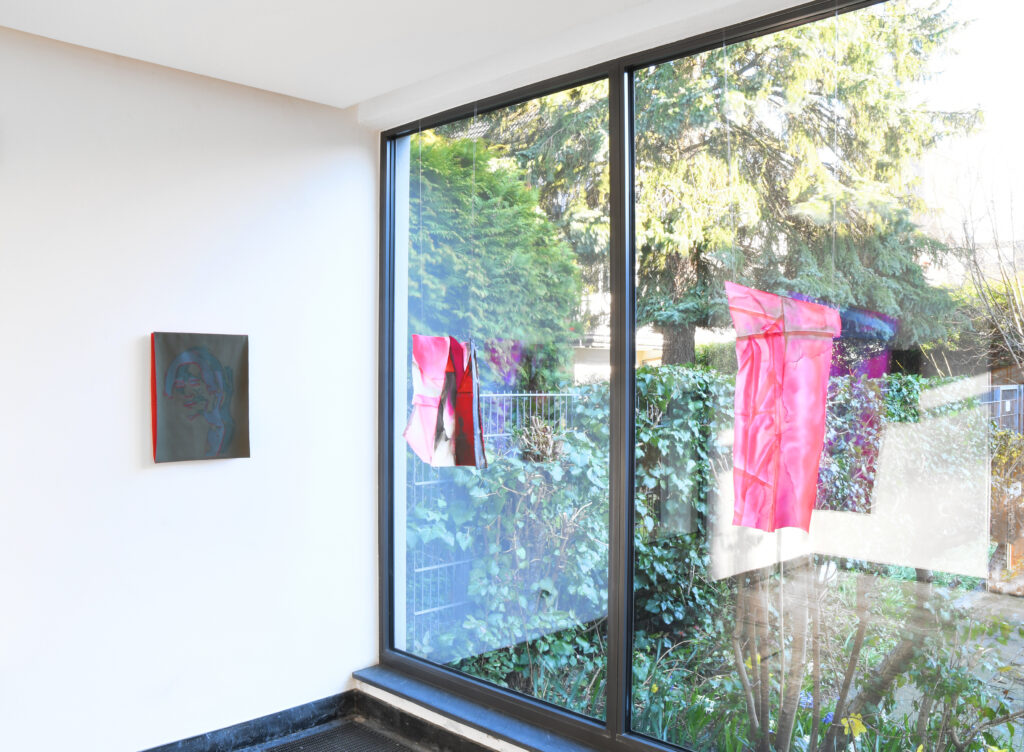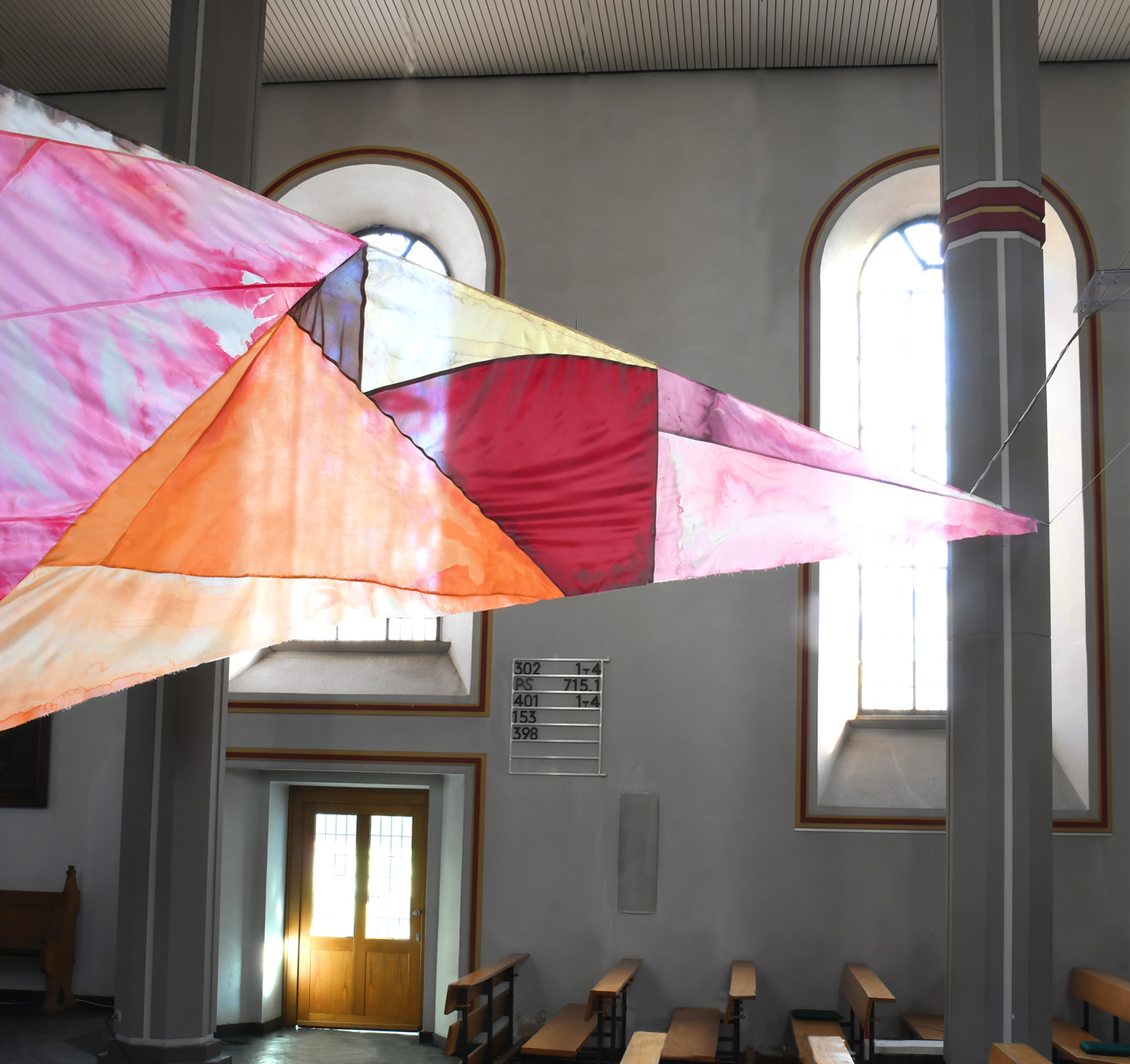
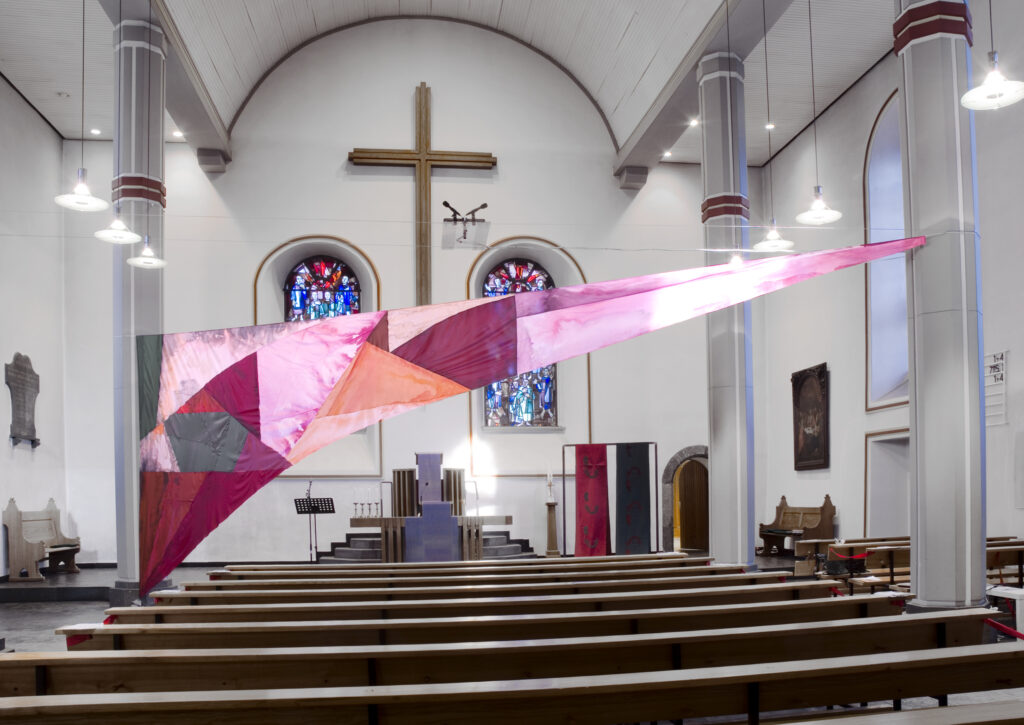
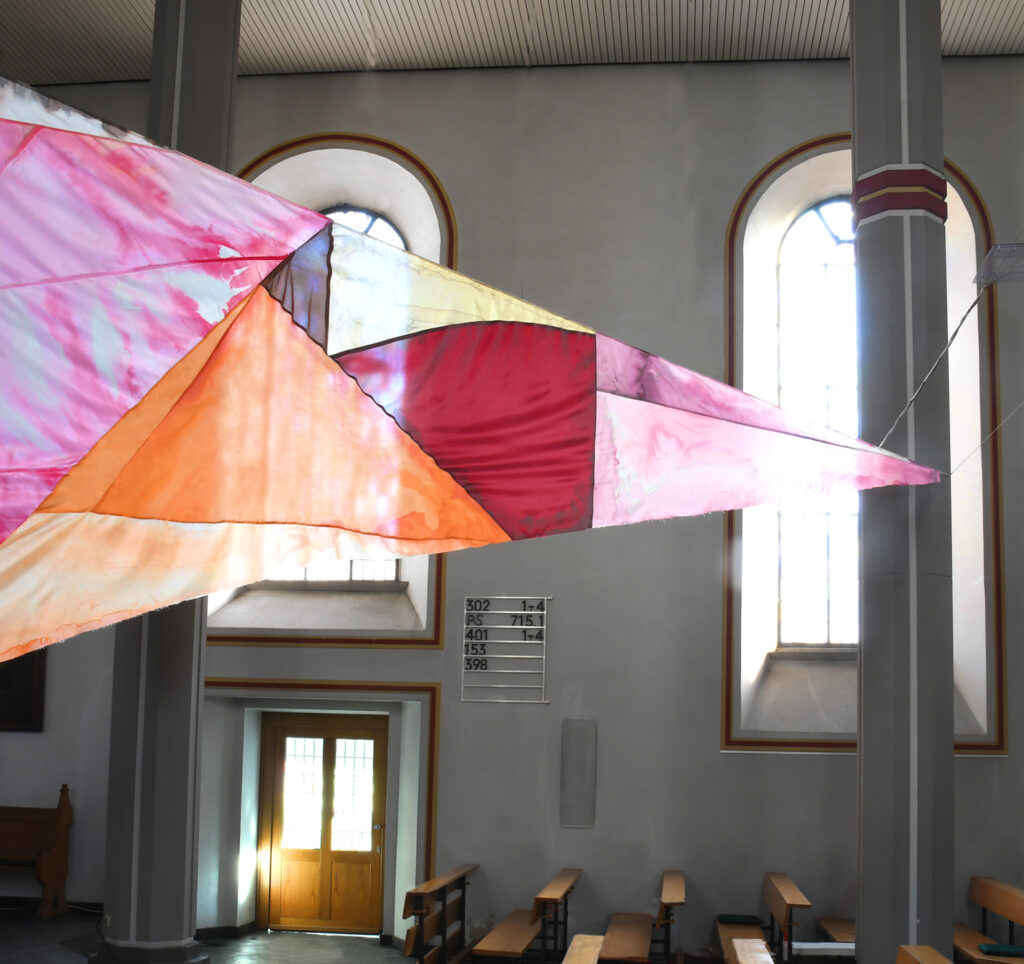
BIRMA besteht aus verschiedenfarbigen sehr leichten, lichtdurchlässigen Stoffen, die ich, ähnlich dem Glas der Kirchenfenster, in geometrische Formen geschnitten und zu einem Ganzen zusammengefügt habe.
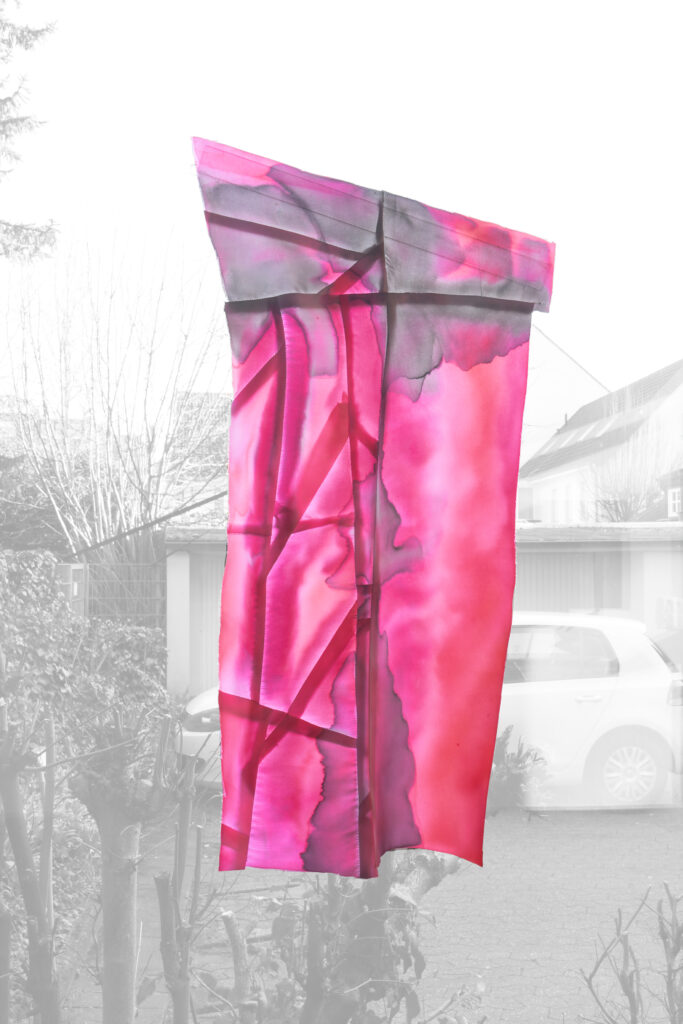
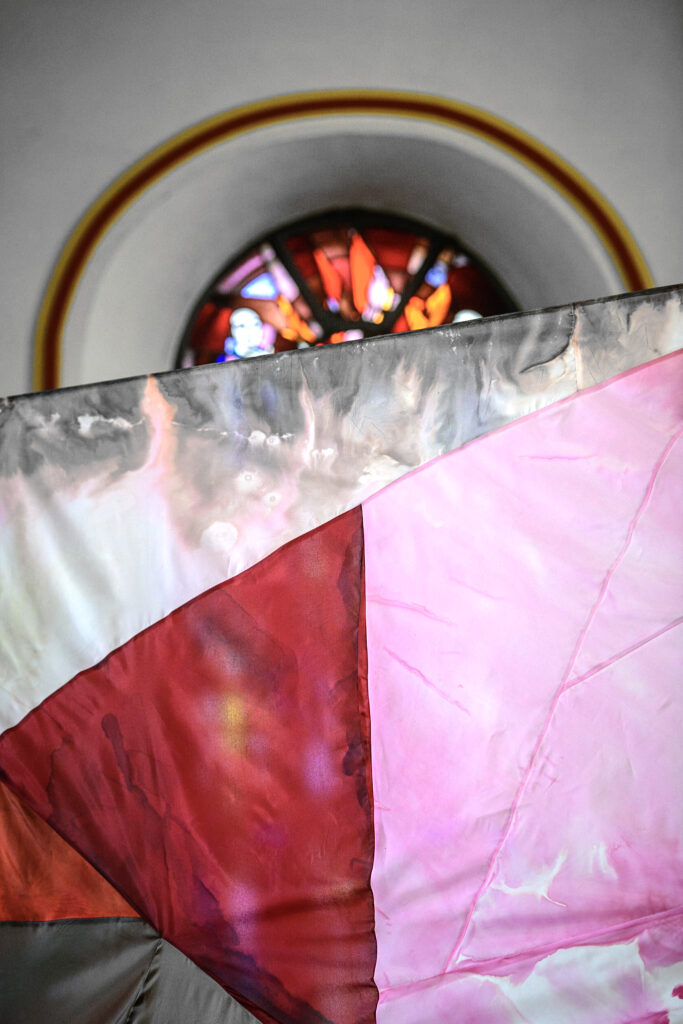
Jede Form ist für sich farbig mit Tinte und Tusche bearbeitet. Manche helle Stoffe tragen die Farbe strahlend in sich, während andere, Dunkelfarbige noch dunkler oder gar fleckig wirken.
Das konzentrierte Farbpigment durchdringt mit viel Wasser den Stoff, fließt und blutet in das Gewebe. In der Durchdringung entwickeln sich die farblichen Formen und im Trocknungsprozess verändern sie sich unkontrolliert. Die stoffliche Begrenzung dieses Prozesses bildet gleichzeitig die Nahtgrenze zur anliegenden Form.
Dabei sind die Nähte bewusst offen gelassenen. Zwischen zwei Säulen installiert, entlehnt sich die entstehende stoffliche Kurve den Bögen der Deckenarchitektur und Fenster- sowie Türformen.
Die Installation ist von allen Seiten gleichwertig zu betrachten und verändert ihre Wirkung im Laufe des Sonnenverlaufs von lichtreflektierend zu durchscheinend. Das Farbspektrum orientiert sich an den Mönchs- und Nonnengewändern des heutigen Myanmars und bewegt sich von rosa, orange über safranrot zu dunklem braunrot.
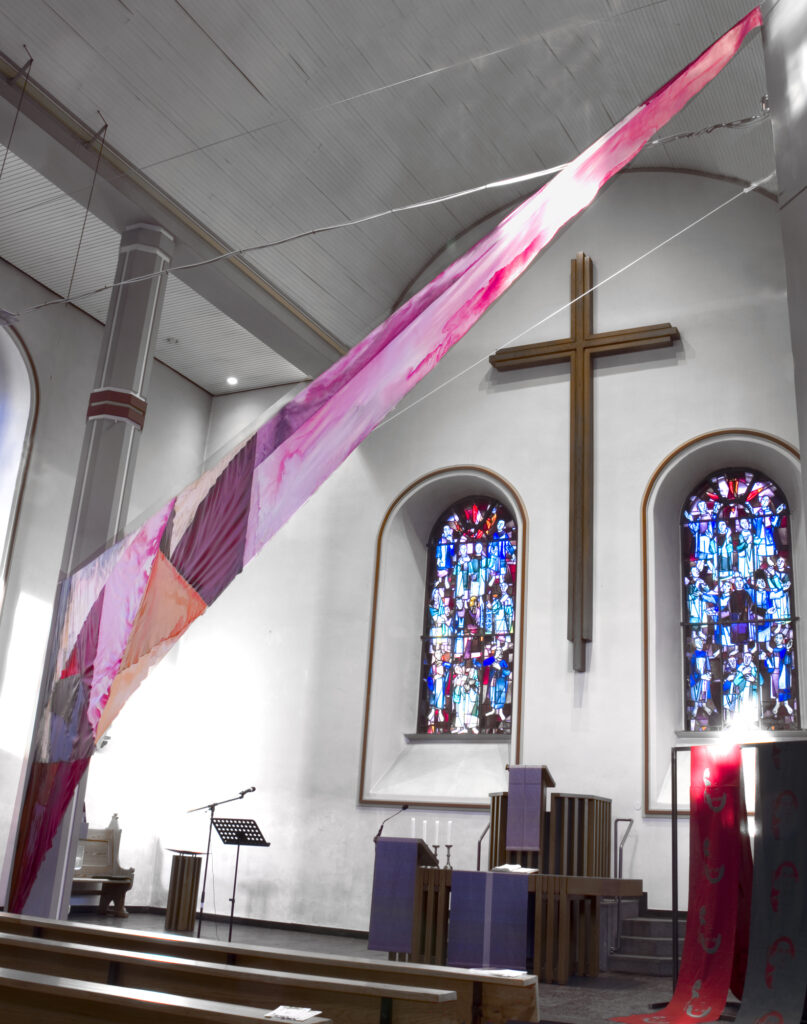
BIRMA consists of very light, translucent fabrics in various colours, which I have cut into geometric shapes – much like the glass in church windows – and assembled into a single piece. Each shape has been individually coloured using ink and Indian ink. Some light-coloured fabrics radiate the colour, whilst others, being darker, appear even darker or even mottled.
The concentrated colour pigment penetrates the fabric with plenty of water, flowing and bleeding into the weave. As it penetrates, the coloured shapes develop, and during the drying process they change unpredictably. The fabric’s edge in this process also forms the seam boundary with the adjacent shape.
The seams are deliberately left open. Installed between two columns, the resulting fabric curve borrows from the arches of the ceiling architecture and the shapes of the windows and doors. The installation can be viewed equally from all sides and changes its effect as the sun moves, shifting from light-reflecting to translucent. The colour spectrum is inspired by the robes of monks and nuns in present-day Myanmar and ranges from pink and orange through saffron red to dark brown-red.


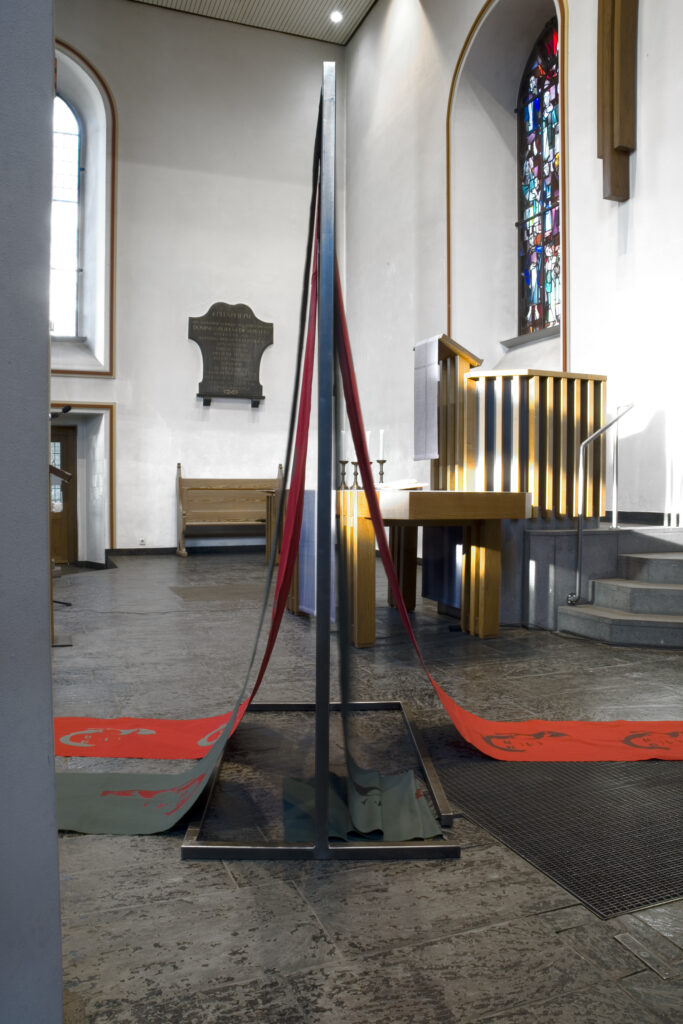
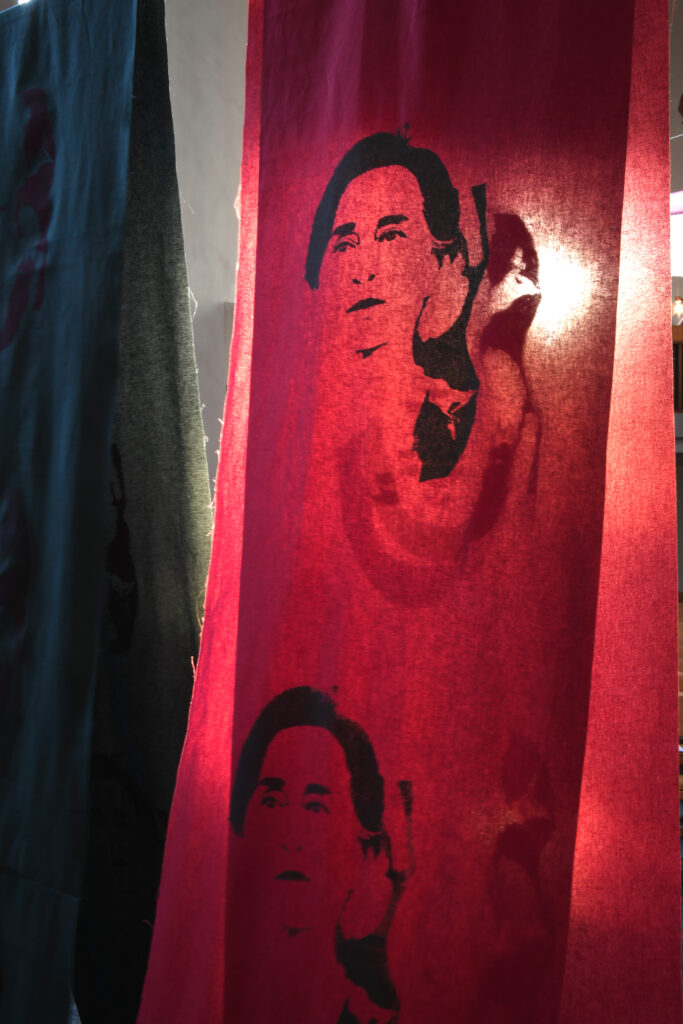
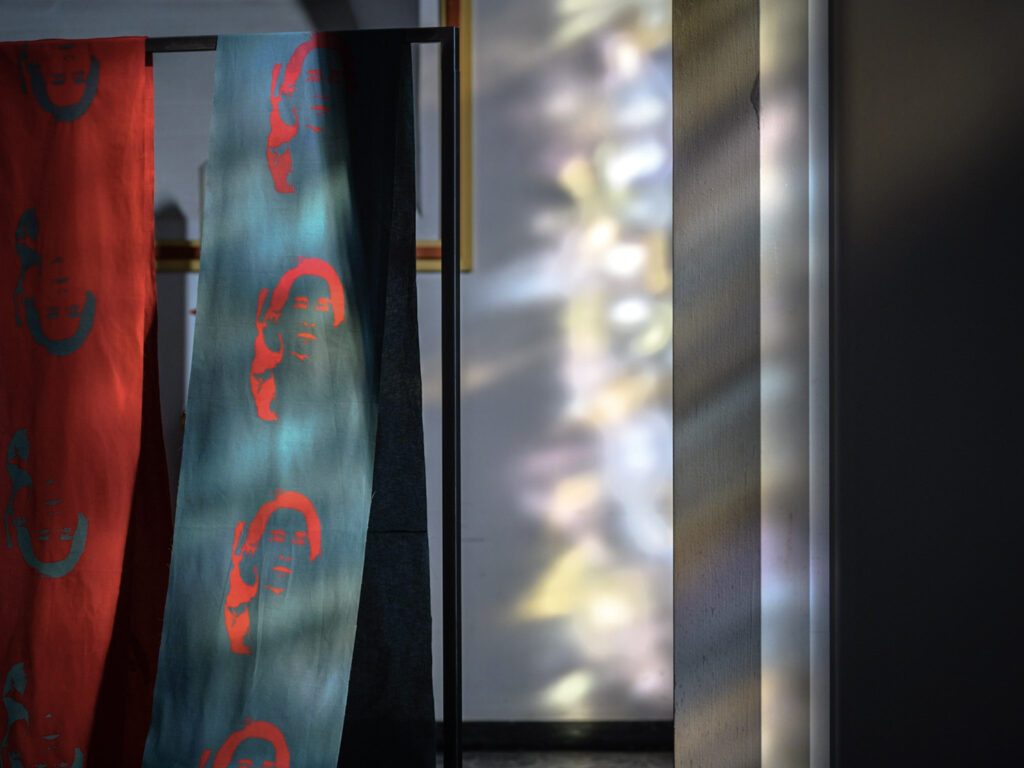
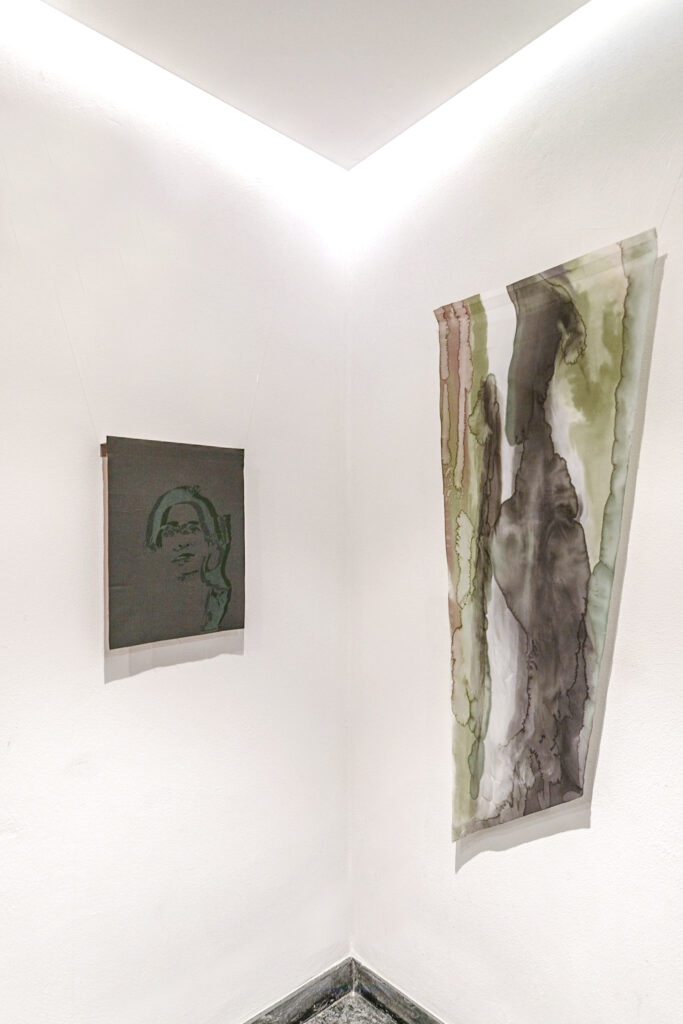
Aung San Suu Kyi – Handsiebdruck, Stoff, Farbe, Metall, variable Installationsmaße, 2022 Ausstellung BIRMA, ev. Stadtkirche Ratingen
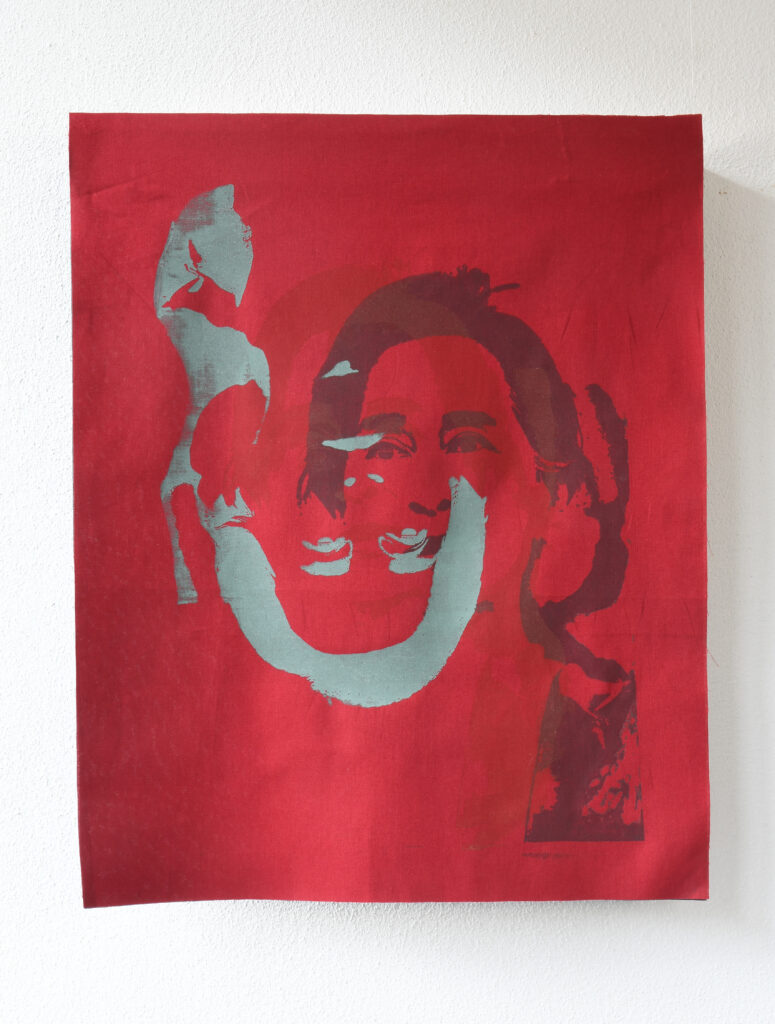
Auch mit der Installation Aung San Suu Kyi beziehe ich mich auf Myanmar, dem früheren BIRMA und wiederhole das Portrait der demokratisch gewählten Präsidentin, die sich in Hausarrest der Militärjunta befindet. In den Bürgerprotesten spielt ihr Bild in Form von getragenen Plakaten eine große Rolle. Teilweise wird dabei das Portrait Aung San Suu Kyi stark abstrahiert, was ich in meiner Arbeit aufnehme.
Das Porträt habe ich mit Siebdruck seriell und komplementärfarbig auf zwei Stoffbahnen gedruckt und über ein nach meinen Angaben gefertigtes Metallgerüst gehängt. Von Druckvorgang zu Druckvorgang verändert sie die Farbigkeit leicht. So entsteht in der Repetition gleichzeitig eine Veränderung und Wandel.
In the installation Aung San Suu Kyi I also refer to Myanmar, formerly Burma, and reproduce the portrait of the democratically elected president who is currently under house arrest by the military junta. Her image plays a major role in the public protests, appearing on placards carried by demonstrators. In some cases, the portrait of Aung San Suu Kyi is highly abstracted, a feature I incorporate into my work.
I have screen-printed the portrait in a series using complementary colours onto two lengths of fabric and hung them over a metal frame made to my specifications. The colouring changes slightly from one print run to the next. Thus, through repetition, a sense of change and transformation emerges simultaneously.